Kudremukh

Kudremukh is a protected Western Ghats trek, not an unrestricted sunrise challenge. Secure the current Forest Department permission and accept entry limits before planning transport or accommodation.
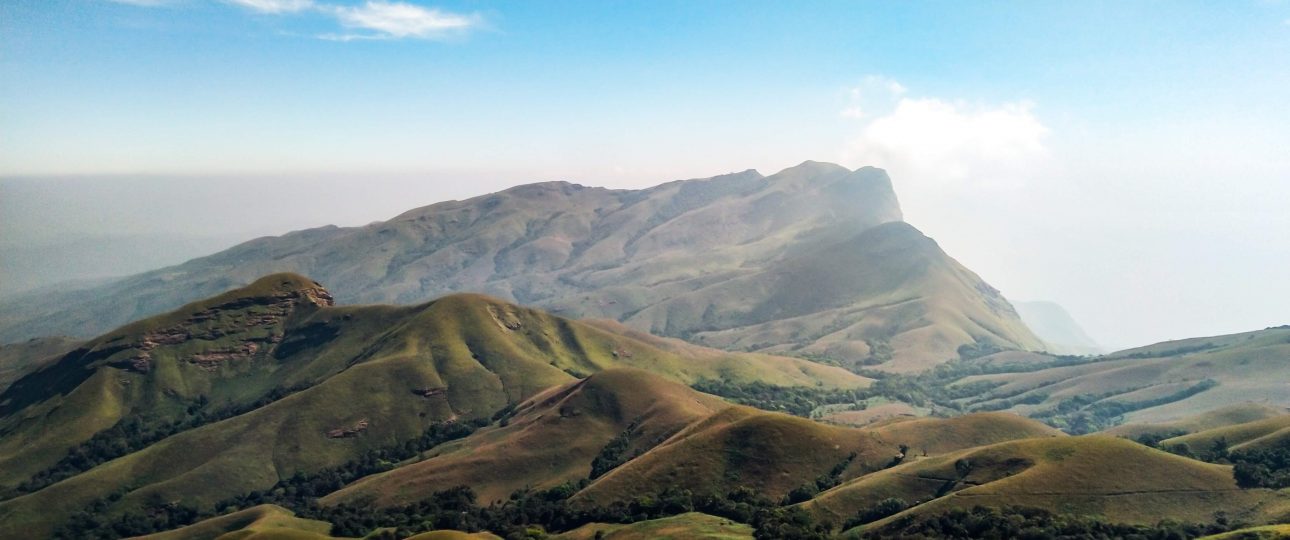
Karnataka Tourism presents the route within Kudremukh National Park, known for rolling grasslands and shola forest. The celebrated landscape is also a sensitive watershed and habitat, so a permit is a management tool rather than administrative trivia.
Why this destination deserves time
Stay near the authorised approach, start at the time instructed and complete only the permitted trail. The ascent is a substantial day for most visitors; build time for registration, weather and a conservative turnaround rather than racing a social-media pace.

The useful question is not how many named stops fit into one day, but which experiences remain meaningful after transport, weather, opening rules and human energy are included. Keep one substantial objective per half-day and leave space for local advice. A copied itinerary cannot know today's road, water, forest or worship conditions.
Access and a realistic base
Confirm the current reporting point, guide rule, daily quota and accepted identity documents before travel. Rural roads and early starts make advance transport important. Do not rely on obtaining a permit at the last moment.
Reserve fixed transport first, then choose accommodation whose exact location supports the itinerary. Ask what is included, which entrance or village is used, and what happens if access changes. Keep an offline map, booking details and an emergency contact; avoid making a non-refundable onward journey depend on the fastest estimate.
A planning sequence that survives disruption
Before booking: put the destination on a real map, identify the responsible authority and separate the gateway city from the final access point. Compare the operator's description with the current primary source. Record the cancellation terms before paying, especially when permits, boats, forest entry, mountain roads or weather determine whether the promised activity can run.
One week before travel: reconfirm the route, official permission, accommodation address and vehicle. Share names and identification exactly as required. Download documents and maps rather than assuming mobile data. If an activity starts early, sleep close enough to arrive without unsafe driving or pressure on staff to delay an official slot.
The day before: ask one concise question: “Is the planned route legally open and appropriate in the current conditions?” Recheck weather and transport, fill water, charge devices and agree a fallback. A useful alternative stays in the same area and does not require a desperate long transfer.
Two useful pacing options
A short visit should focus on one interpreted experience and a safe return; it should not imitate the highlights of a three-day itinerary. With two or three nights, add a locally guided route, revisit the landscape in different light and keep a buffer for conditions. Longer stays should deepen the visit through community services and slower observation, not multiply distant check-ins.
Season: choose the trade-off, not a slogan
Post-monsoon greenery is attractive, but wet ground and leeches remain possible. Heavy monsoon rain can affect access; hotter periods reduce comfort on exposed sections. Current forest notices override seasonal generalisations.

Check an official forecast and an accountable local source 24 to 48 hours before departure. A beautiful forecast icon does not cancel a forest closure, tide warning, landslide, flood, religious event or protected-area rule. Postponing is the correct decision when the legal or safe route disappears.
Safety and practical limits
Fitness, slippery descents, stream crossings, heat and changing cloud require preparation. Carry water, food and rain protection without overloading. Turn around when instructed and never leave the route for a ridge photograph.
Carry suitable footwear, refillable water, sun and rain protection, essential medicine and a charged phone, but do not confuse equipment with permission or expertise. Tell someone the route and return time. Travel insurance should cover the actual altitude, trekking, boating or wildlife activity planned.
Budget honestly
Price the whole chain: gateway transport, final transfer, accommodation, official entry, guide or naturalist, local vehicle or boat, meals and a contingency margin. Ask whether a quote is per person, vehicle, room or group. The cheapest headline rate often excludes the element that makes the visit safe or legal. Pay official fees and prioritise competent guidance over an extra attraction.
Keep a modest amount of cash where digital payment may fail, but use official counters and obtain a receipt when available. Never pay an unofficial intermediary to bypass a quota, closure, checkpoint or protected-area rule. If a permit is unavailable, choose another date or the documented fallback.
Questions to ask before paying
- What is the exact meeting point, route, duration and current authorisation?
- Which costs are per person, vehicle or group, and what is excluded?
- What equipment, guide qualification or identification is mandatory?
- What is the written alternative or refund if conditions close the activity?
- Which claim comes from an authority, and which is only an operator proposal?
Travel without degrading the place
Pack out every item, avoid single-use plastic, keep sound low and never feed wildlife. A guide is not there to facilitate prohibited shortcuts. Choose accommodation and transport that respect permit timing.
Ask before photographing people, ceremonies, homes or work. Buy local services at a fair agreed price and keep public paths clear. Never remove natural or archaeological material. If bins are absent or full, take waste back to the nearest place with proper collection.
Photography without turning the visit into extraction
Use existing paths and viewpoints, keep tripods out of circulation routes and do not stage risky behaviour. Avoid drones unless current law, local rules and specific site permission clearly allow them; a quiet protected, religious or residential landscape should not have to absorb a visitor's production. Caption images accurately instead of inventing wildlife, ritual or historical claims.

Who will enjoy it—and who should reconsider
It suits regular walkers able to complete a long day on uneven ground. It is unsuitable as an improvised outing after a late arrival. Ask for precise terrain and distance advice if knees, balance or stamina are concerns.
Accessibility cannot be inferred from a destination label. Ask about the actual vehicle, steps, surfaces, toilets, jetties, trail and accommodation room. Families should assess exposure, long transfers and medical access rather than relying on a generic family-friendly claim.
What to verify again on the travel date
- Official opening, permit, ticket and reporting time.
- Road, trail, tide, river, forest or weather restrictions.
- The exact pickup point and a realistic return time.
- Guide, vehicle or vessel identity and required safety equipment.
- Photography, worship, wildlife and community rules.
- Nearest practical medical help and the group's turnaround threshold.
This list is deliberately repeated at the point of decision because destination content ages unevenly. Geography and protected status may remain stable while a gate, fee, road, timetable or allowed activity changes overnight. Current official information wins whenever it conflicts with this guide.
Build a coherent India itinerary
Compare Cherrapunji, Dandeli and Ziro Valley for a related landscape or planning challenge. Use the India destination hub to connect regions realistically. These links are inspiration, not a recommendation to combine distant states in one rushed week.
Our verdict
Kudremukh deserves its popularity only if visitor numbers and behaviour remain controlled. Permit first, start early and let conservation rules define the day.
Recheck the primary resources before booking: official source on national-park trek.
Editorial responsibility: this guide distinguishes verified destination facts from planning advice. Access, prices, permits, weather and operating rules remain time-sensitive and must be confirmed for the actual travel date.